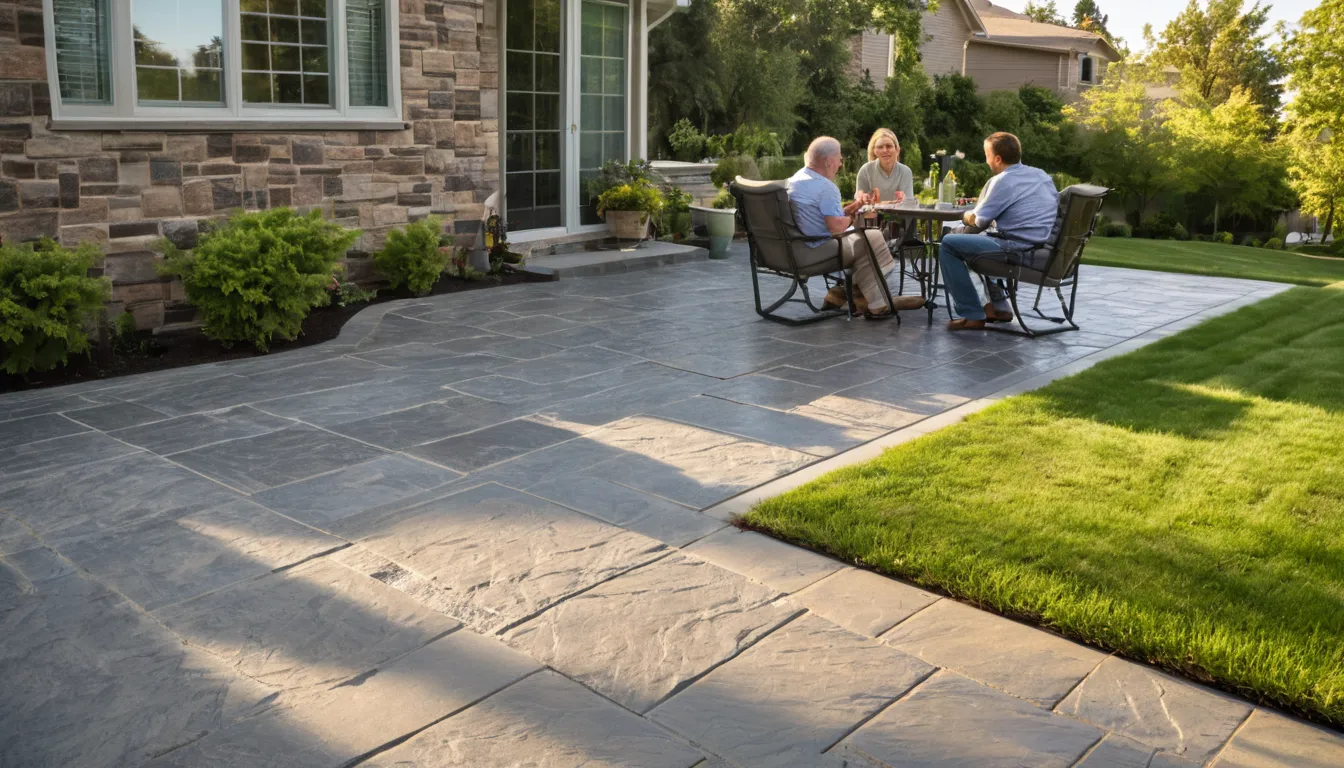
Stamped Concrete for Patios and Walkways
Request a stamped concrete estimate
Stamped concrete gives a poured slab the look of stone, brick or wood. It is a popular pick for patios, walkways and pool decks. It usually costs less than natural stone and goes in as one seamless surface. Colors and patterns are wide open, so you can match your house and yard.
Estimatedzealand Concrete is a referral service. It does not pour or finish concrete. Independent providers in the network do. This page gives you the options, a typical cost range, early warning signs and the steps toward a clear plan. Answer first, then the reason. Know your options, request an estimate, and talk with a local provider before anyone starts work. We also cover frost, drainage and sealer, because climate matters.
The short answer on stamped concrete
Stamped concrete is poured concrete pressed with patterns. It can look like stone, brick, slate or wood. It usually costs less than the real thing. It suits patios, walkways and pool decks. It needs a sealer and some care. That is the whole idea. The rest of this page covers your options and the likely next steps.
Know your options first
You have a few routes. Each fits a different yard. You can also skip the pattern and choose plain colored concrete with a broom finish. That costs less and hides wear well. Some homeowners add a stamped border and keep the middle plain.
New pour with a stamped finish
A provider sets forms, pours fresh concrete, adds color and presses the pattern. You get the most control over shape, color and depth. This is the usual path for new stamped concrete patios.
Stamped overlay on an old slab
A thin layer goes over a sound slab and gets stamped. It costs less and skips the tear-out. But the old slab must be solid. Deep cracks or sinking edges will pass right up through the overlay.
How stamped concrete is made
The steps are simple. The order matters.
- The provider marks the area, digs out soil and sets forms.
- A gravel base is packed so the slab sits level.
- Concrete is poured and leveled.
- Color goes into the mix or onto the surface.
- A release agent keeps the stamps from sticking.
- Mats press the pattern while the concrete is still soft.
- Control joints are cut so cracks form where planned.
- After curing, the surface is cleaned and sealed.
Popular patterns and colors
Slate, random stone, cobblestone, brick and wood plank are common. Earth tones hide dirt and suit frame houses, bungalows and ranch homes. Grays fit a modern look. Dark colors show wear and get hot in summer sun. Ask for a sample board. Color looks different outside than it does in a brochure.
Where stamped concrete works well
- Back patios and seating areas
- Walkways to a front door
- Pool decks, with a slip-resistant sealer
- Fire pit surrounds
- Porch landings
- Accent borders on other concrete flatwork
Many older homes have a small back slab that is ready for an upgrade.
Where it is a poor fit
Steep slopes, soft fill dirt and spots that stay wet cause trouble. If you need concrete driveway repair or patching on an old cracked slab, that is a different job. This page is about new stamped work. Say so when you request an estimate.
Spot it early: warning signs
Stamped surfaces tell you when something is off. Catch it early and the fix stays small.
Sealer turns dull or cloudy
Sealer is the shield. When water stops beading on the surface, it is wearing thin. Resealing at that point is a modest job. Waiting lets water and stains in.
Hairline cracks
Thin cracks along joints are common. Cracks that widen or run across the pattern deserve a closer look.
Pooling water and sinking edges
Puddles after rain point to a slope problem. A slab that dips toward the house can send water to the foundation. If you also see cracks in basement walls, talk to foundation repair experts before adding any new slab.
Built for frost, hail and floods
Cold winters with deep frost push on slabs. Ask about a compacted gravel base, air-entrained concrete and a slope that sheds water away from the house. Spring flooding and sump pumps make drainage a big deal. Hail rarely hurts cured concrete, but it can mark a fresh pour, so providers watch the forecast. De-icing salt can strip sealer. Use sand and a plastic shovel instead.
Stamped concrete vs. pavers
Short answer: stamped concrete is one slab. Pavers are many small pieces.
- Stamped: seamless surface, quicker to install, often lower cost, needs sealer, and cracks can show.
- Pavers: single units can be lifted and replaced, more joints for weeds, can shift with frost, often cost more.
Pick stamped if you want a clean surface and a tighter budget. Pick pavers if you want easy spot fixes later.
How long the job takes
Plan on a few days of work for a typical patio, plus cure time. Light foot traffic is often fine after a day or two. Furniture and heavy items wait longer, often a week or more. Sealer goes on after curing. Rain, cold and heat can shift the schedule. Ask the provider for a timeline in writing.
Caring for stamped concrete
- Sweep often.
- Rinse with a hose. Use mild soap on stains.
- Reseal about every two to three years. It varies with sun and traffic.
- Skip harsh acids and metal shovels.
- Put planters on saucers or feet.
Small habits keep the color rich and the surface grippy.
Choosing a stamped concrete provider
Look for a provider who has done stamped concrete flatwork, not only plain slabs. Ask to see finished jobs. Ask about the base, joint layout, sealer type and weather plan. Check that they hold the licensing and insurance your area requires. Get at least two written quotes and compare them line by line. Estimatedzealand Concrete does not do the work. It connects you with independent providers in the network.
What belongs in a written quote
- Square footage and slab thickness
- Pattern and color choice
- Base and drainage prep
- Demolition and haul-away, if needed
- Sealer type
- Timeline and payment schedule
Your next step
Request an estimate. Share the size, the pattern you like and any site problems. A local provider in the network can follow up with next steps. There is no obligation. Prefer to talk? Request a callback to check provider availability.
What's Included
Pattern choices
Slate, stone, brick and wood looks, matched to your home and yard style.
Color and release options
Integral color, surface tint and contrasting release shades give the stamped surface a natural, layered look.
Base and drainage
Compacted gravel and a proper slope help the slab handle frost, rain and spring runoff.
Sealer and finish
A sealer protects color and adds grip. Ask which finish suits sun, shade and wet feet.
What Stamped Concrete Typically Costs
These are typical U.S. ranges. Your price depends on size, pattern, site prep, local labor and weather. Get a written quote that lists each line, so you can compare offers fairly.
| Item | Typical range | Notes |
|---|---|---|
| Stamped patio, new pour | $12 – $25 per sq ft | Pattern and color add cost |
| Small patio, about 200 sq ft | $2,400 – $5,000 | Size and access change the total |
| Stamped walkway | $10 – $22 per sq ft | Curves and borders add labor |
| Stamped overlay on sound slab | $6 – $12 per sq ft | Old slab must be in good shape |
| Demolition and haul-away | $2 – $6 per sq ft | Needed if an old slab comes out |
| Resealing | $1 – $3 per sq ft | Often every two to three years |
How It Works
Share your plans
Tell us the size, pattern ideas and any trouble spots, like pooling water or soft ground.
Get matched with a provider
A local provider in the network reviews your details and reaches out about next steps.
Compare written quotes carefully
Check size, thickness, base prep, sealer and timeline. Ask questions before you sign anything.
Set the schedule and weather plan
Agree on dates, curing time and what happens if rain or cold interrupts.
Why Call Estimatedzealand Concrete
Options laid out first
You see the choices and likely next steps before any provider starts work.
Local providers
Independent providers in the network know local soil, frost depth and weather.
Plain talk
Short answers, clear ranges and a reminder to get every quote in writing.
No pressure
An estimate request carries no obligation. You choose whether to move ahead.
Other Services
Need stamped concrete in Cleveland?
Planning a new driveway or patio? Send an estimate request, or email contact@estimatedzealand.property. A local provider in our network follows up. No obligation.
No obligationStamped Concrete FAQ
How much does stamped concrete cost per square foot?
Typical U.S. prices run about $12 to $25 per square foot for a new stamped pour. Pattern, color, site prep and local labor all move the number, so get a written quote before work starts.
Does stamped concrete crack in cold winters?
It can, like any concrete. Deep frost pushes on slabs, so a compacted gravel base, planned control joints, good drainage and a sound sealer matter. Small hairline cracks are common. Wide or growing cracks deserve a closer look from a provider.
How long does stamped concrete last?
With a good base and regular resealing, stamped concrete can last for decades. Color fades and the surface wears faster without sealer. Plan to reseal every two to three years, depending on sun and traffic.
Get in touch
Planning a new driveway or patio? Send an estimate request, or email contact@estimatedzealand.property. A local provider in our network follows up. No obligation.
No obligation